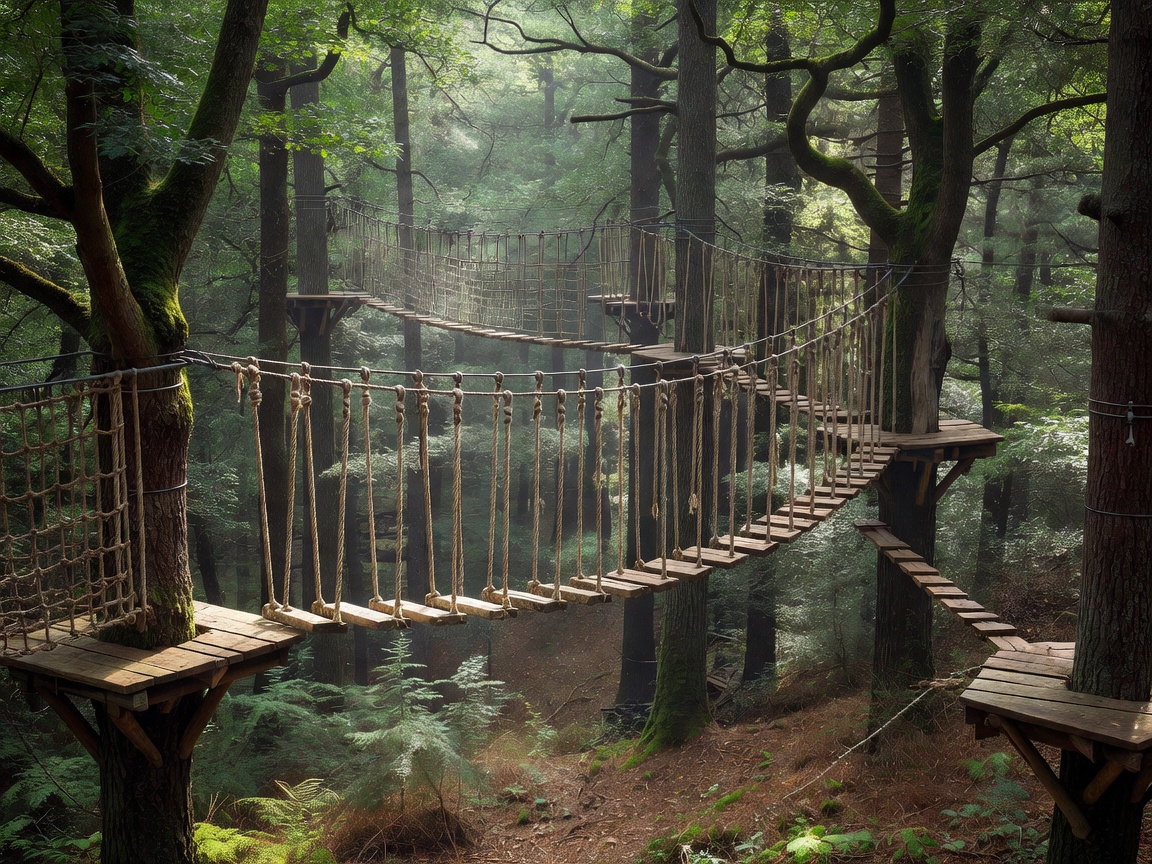
“Adventure park” can describe very different places. Some are open playgrounds with climbing and balance features. Others offer structured, elevated activities with entry rules, staff oversight or specific equipment. Check the activity level before setting expectations.
Playground or higher-intensity activity?
A playground generally offers equipment designed for informal use within a public or managed play area. Visitors choose among features and supervise according to the site’s rules. A higher-intensity course may have controlled entry, defined routes, age or height requirements, harness procedures, timed sessions or staff instructions. These are not interchangeable formats.
Do not assume that a rope bridge or raised platform is suitable for every visitor. Read on-site signage and current venue guidance. If details are unclear, ask the responsible operator before joining an activity. This guide does not provide equipment instructions or certify safety.
Common movement elements
Climbing structures offer routes up, across or through a form. Rope nets and balance elements focus on changing grip and foot placement. Bridges connect platforms and make a journey feel continuous. Towers provide height and a point of orientation. Low movement trails can offer a less elevated alternative.
Variety matters more than a single dramatic obstacle. A well-considered zone may provide ground-level options beside more demanding elements. That gives a group room to choose different levels of challenge. Layout, landing areas, circulation and visibility influence how comfortable a visit feels.
Age suitability and supervision
Use published age guidance as a starting point, not a substitute for judgement. Children of the same age can have different confidence, reach and coordination. Look for separate activity areas, clear entry and exit points, and routes that adults can follow without obstructing play.
Supervision expectations vary. Some public playgrounds ask carers to remain responsible throughout. Managed courses may give additional instructions but do not remove the need to follow rules and keep a group together. Before arrival, agree on a meeting point and what to do if someone leaves the activity area.
Footwear, weather and access
Closed, secure footwear is a practical choice for many outdoor movement spaces. Loose straps, slippery soles or footwear that does not stay on can make movement less comfortable. Follow the venue’s published footwear rules where an activity has specific requirements.
Rain can change grip, temperature and surface conditions. Wind, heat, cold and low light can also affect comfort or lead a venue to restrict an activity. Check the venue’s own current updates rather than relying on a general forecast alone. Bring a layer and allow for a change of plan.
Check access routes as carefully as the activity itself. Ask about step-free approaches, gradients, ground surfaces, accessible toilets and whether a companion can remain nearby. A climbing route may not be usable by everyone, so look for meaningful alternatives in the surrounding space.
Safety signage and site information
Before taking part, read entry signs and instructions in full. Look for age or height conditions, supervision rules, equipment requirements, operating restrictions and weather notices. Do not climb on closed equipment or try to alter a structure. Report a concern to the responsible venue rather than attempting a repair.
For an unnamed destination, no opening times, costs, staff arrangements or facilities can be assumed. Check directly with the venue. If information is not published, contact it before making a long trip.
Choosing an activity
- Match challenge level to the youngest or least confident participant.
- Check whether the space is self-directed play or a controlled course.
- Confirm access, supervision and footwear requirements.
- Review weather policy and current conditions.
Good for
Groups looking for active outdoor movement, families comparing low-level play with structured courses, and visitors who want to understand rules before arrival.
What to know
Elevated routes need more planning than a general play area. Venue rules take priority. A photo cannot confirm age suitability, access or current operating conditions.