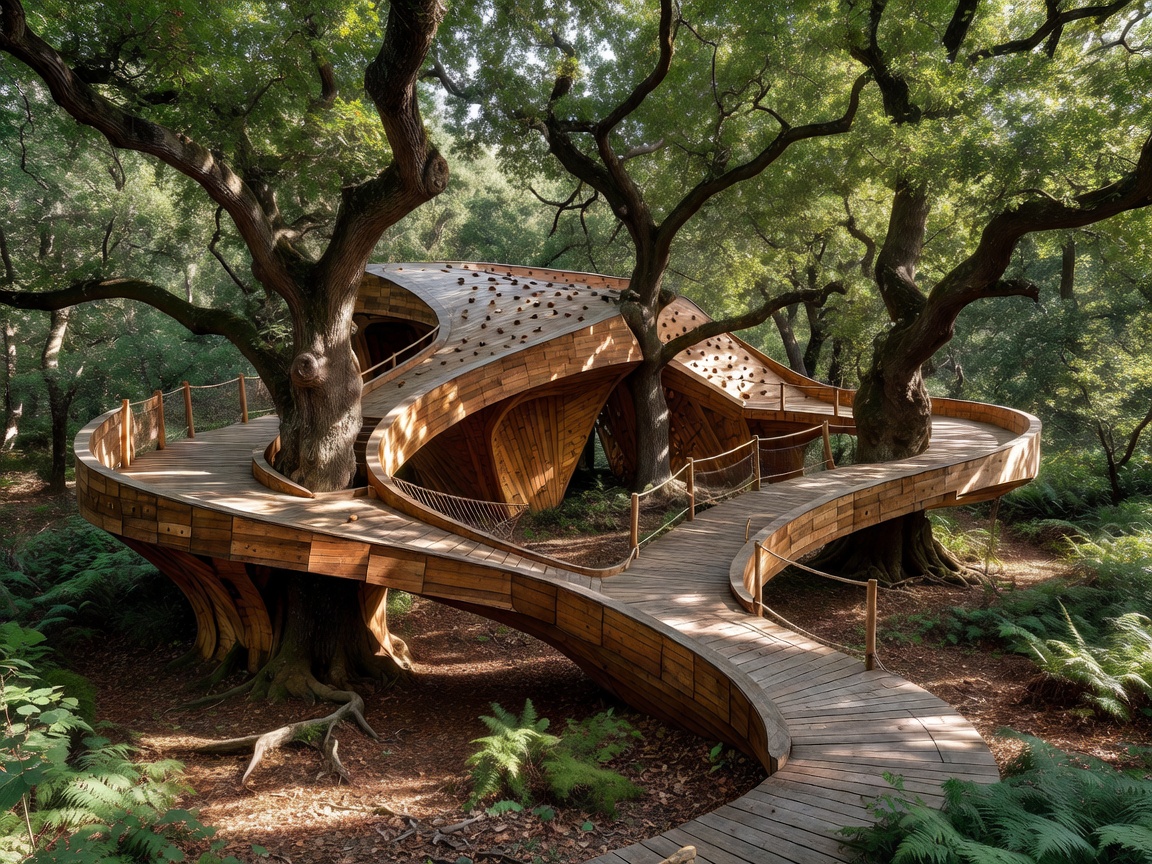
A distinctive playground is not simply a collection of unusual equipment. It makes a clear connection between play, space and the people who use it. A strong design can use a memorable shape, but it also needs legible routes, room to move and places to pause.
What makes a play space distinctive?
Look for a design idea that carries through the whole site. It may be a timber landscape, a series of linked platforms or a play route shaped around existing terrain. The idea should help visitors understand how the space works. It should not make basic movement difficult.
Architectural playground design treats equipment, paths, planting, shade and seating as parts of one environment. Some spaces use a single landmark structure. Others rely on a sequence of smaller elements. Neither scale is automatically better. A compact site can feel purposeful when its parts connect. A large site needs clear orientation and places to regroup.
Materials, form and durability
Timber can soften a structure and sit comfortably beside planting. It also needs suitable detailing and ongoing maintenance. Surface wear, moisture, exposed joints and local climate all affect how it performs over time. Metal and manufactured panels can support precise forms and consistent surfaces. Their comfort and exposure depend on finish, shade and site conditions.
Unusual climbing structures may invite several routes through the same space. Check whether paths are visible and whether the challenge suits the intended age range. A sculptural form is not automatically accessible. Look separately for step-free routes, transfer opportunities, ground-level activity and usable space alongside equipment.
Urban, parkland, woodland and coastal settings
- Urban: Compact footprints and hard surroundings can make clarity, shade and seating especially important. Nearby routes and public transport may shape access.
- Parkland: More open ground can support connected play zones and pauses. Distances between features may be greater, so wayfinding matters.
- Woodland: Existing trees and uneven terrain can create a strong landscape relationship. Root protection, damp ground and seasonal visibility need attention.
- Coastal: Wind, salt exposure and bright conditions influence comfort and material maintenance. Check sheltered areas and the character of the approach.
These are broad setting types, not fixed rules. Local climate, site history and maintenance capacity can alter the priorities.
Small spaces and large spaces
Small play spaces can focus attention. A climbing loop, a swing and a generous shared surface may offer different ways to use one compact footprint. The limit is capacity: busy periods can make circulation and waiting areas feel tight. Check sightlines and whether carers have a place to stand or sit without blocking routes.
Large play areas can offer more variety and separation by activity. They may suit groups with different ages or energy levels. They also ask for more walking, more supervision planning and clearer meeting points. A useful site plan or visible landmarks can help a group stay oriented.
Selection criteria
Start with the people and the visit. Consider age range, mobility, comfort with height and the time available. Then assess the design: Are routes clear? Are there options for different confidence levels? Are quieter spaces near active structures? Can adults see key areas? Is there shade or a place to rest?
Do not infer quality from photographs alone. Images rarely show surface conditions, crowding, access gradients or seasonal maintenance. For a named destination, consult its responsible venue or local authority for current access information. This guide does not list or certify individual playgrounds.
Good for
Design-minded visitors, families comparing types of play space, and anyone choosing between compact urban sites and larger landscape-led environments.
What to know
- Distinctive form should work with clear circulation and practical access.
- Timber and other exposed materials need maintenance suited to local weather.
- Opening, facilities and access details vary by location. Confirm them directly before travel.