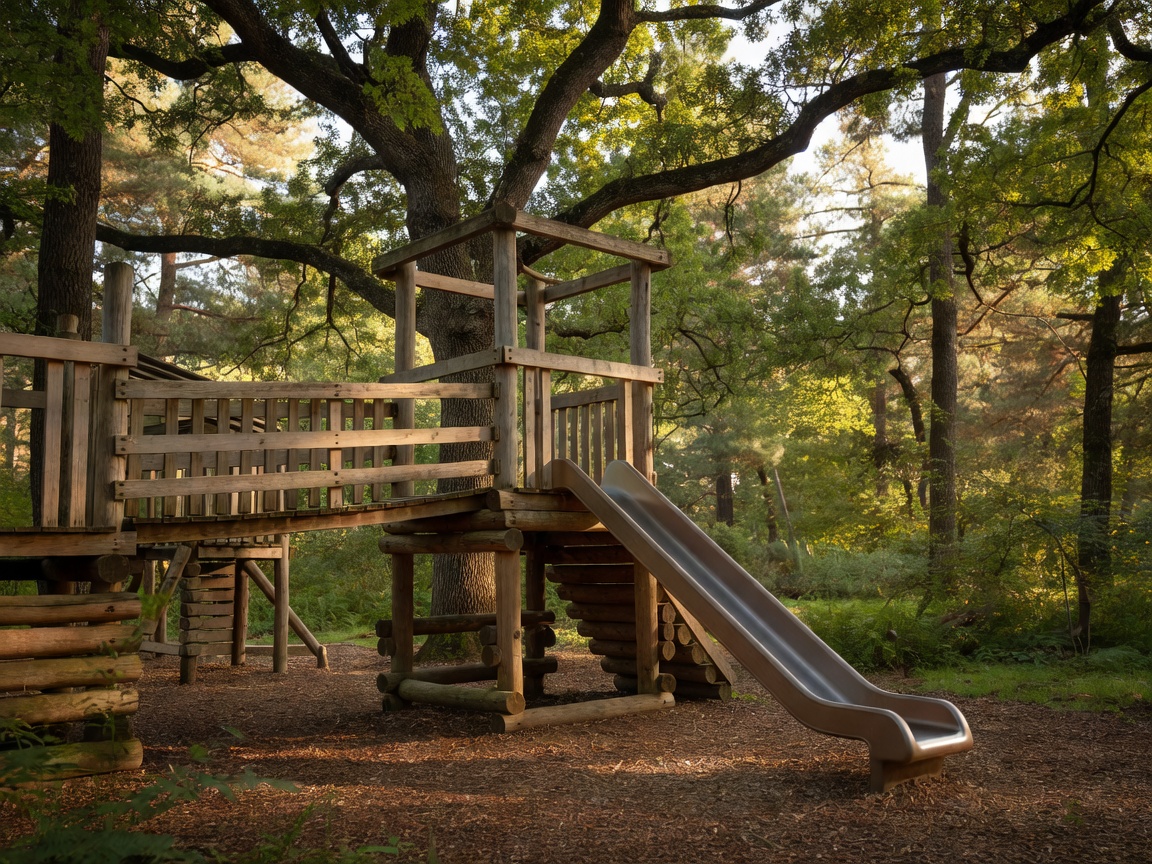
Slides, swings and climbing structures are easy to spot. Less visible decisions—routes, shade, seating and the space around equipment—often shape how a whole visit feels. Consider the layout as a sequence of activities and pauses.
Movement and height
Slides create a clear route down from a platform. Their usability depends on access to the start, the exit area and safe circulation away from the landing zone. Swings offer repeated motion and can be used in different ways depending on seat type and layout. Check the approach and the space needed around moving equipment.
Climbing walls and nets provide routes that vary by height, grip and angle. Rope bridges connect levels and add movement between platforms. Towers act as destinations or wayfinding landmarks. Each elevated feature needs clear access and exit routes, suitable supervision and alternatives for people who do not use height-based play.
Routes and ground-level features
Tunnels create enclosed routes and can connect different parts of a structure. Consider visibility, width and how a visitor enters and exits. Balance beams offer a focused route across a space. Low versions may sit beside a more challenging sequence. Bridges can connect zones, but their approach and surface matter as much as the span.
Ground-level features can widen the ways a space is used. Sensory elements may include varied surfaces, sound, movement or tactile details. Their usefulness depends on placement, maintenance and whether visitors can reach them. Water play can add a seasonal activity. Confirm whether water is available, how it is managed and whether the surface around it suits your group.
Access, age and supervision
Accessible routes are part of the overall layout, not a single piece of equipment. Look for continuous step-free paths between entrances, activities and rest areas. Check gradients, surface firmness, turning space and whether a companion can stay close. Some features can be reached only by steps or climbing. A meaningful alternative nearby can help people share the same environment without using identical equipment.
Age guidance can help visitors judge scale and challenge. It cannot account for every individual. Younger children may need a clear sightline and close supervision; older children may prefer connected routes or more demanding movement. Separate zones can help, but a shared layout should still allow adults to see between them.
Shade, seating and comfort
Shade affects how long a group can comfortably stay, especially on exposed sites. Natural tree cover changes through the year. Built shade may cover only part of a play area. Seating gives adults and children somewhere to pause, but its location matters: a seat should not block a path or leave key activity areas out of view.
Consider drinking water, toilets, picnic space and shelter separately. These are facilities, not guaranteed parts of every playground. Confirm current details with the venue before travel.
Space, materials and weather
Every feature needs room for approach, use and circulation. Crowding several activities together can make waiting and supervision harder. Timber, metal, rope and manufactured panels respond differently to sun, moisture, wear and maintenance. Outdoor surfaces also change with rain, frost, heat and leaf fall. Do not infer current condition from a photograph.
There is no safe construction recipe in a visitor guide. Equipment selection, installation, inspection and repair belong to qualified professionals and responsible operators. Visitors should follow signs and report concerns rather than attempting to modify equipment.
Compare a complete setting
- Are active features connected by a clear route?
- Can different ages and confidence levels find options?
- Are accessible paths, seating and shade integrated?
- Can carers see important areas without standing in circulation routes?
- Are site-specific rules and current facilities easy to confirm?
Good for
Families choosing between different equipment mixes, designers reviewing user needs, and visitors who want to understand how individual features affect a shared site.
What to know
A feature list cannot establish quality, safety or access on its own. Layout, maintenance, surroundings and current conditions all matter.