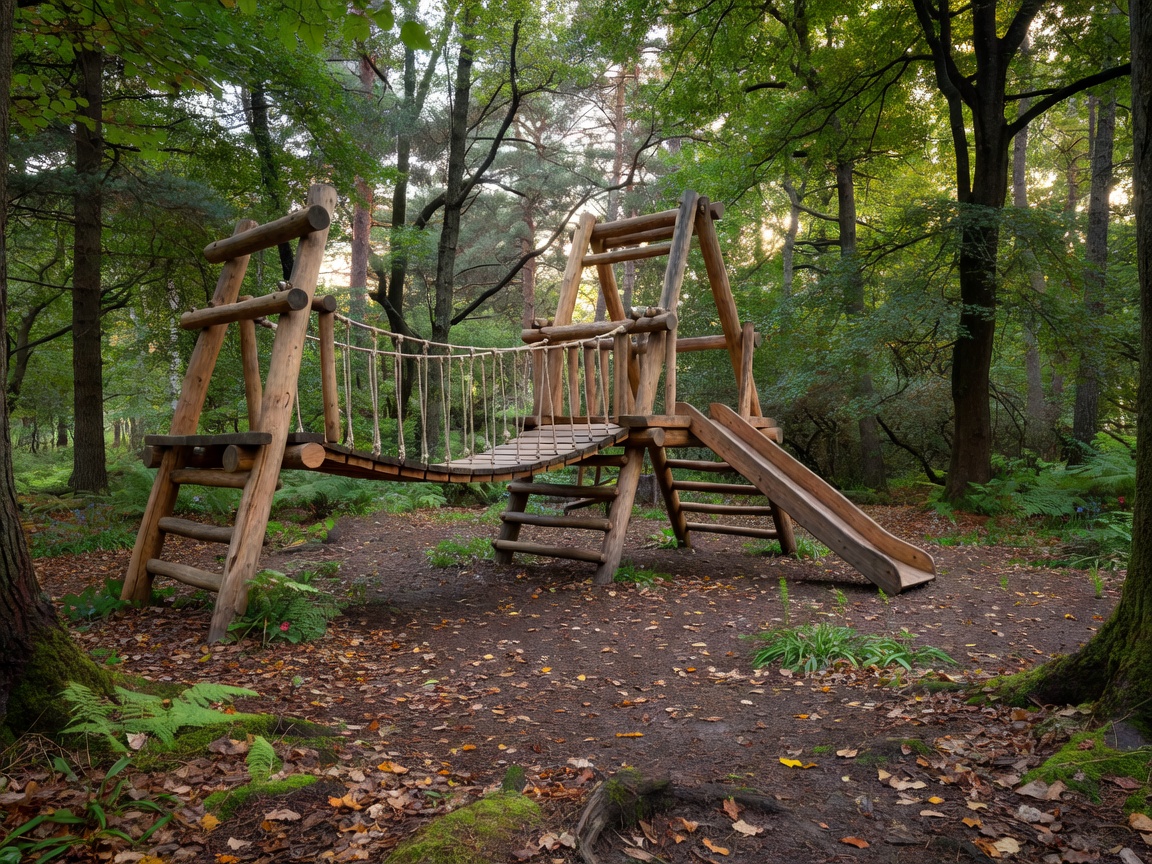
Nature play is a design approach, not a guarantee that every object is natural or every surface is untouched. A site may combine manufactured equipment with planting, terrain, timber, sand or water. The useful question is how those parts work together.
Materials and sensory qualities
Timber offers visible grain, varied form and a material relationship with trees and landscape. Stone can define edges, seating or low routes. Sand changes underfoot and can support open-ended use. Water features, where present, add a moving element but require clear operating and maintenance arrangements.
Leaves, bark, texture, shade and changes in ground level can make a setting feel varied. Planting can soften boundaries and provide a sense of enclosure. These elements should be considered alongside circulation and visibility. A natural-looking edge must not make it hard to see where a path ends or an activity begins.
Terrain and landscape integration
Some designs use existing slopes and contours. Others introduce low mounds, stepping routes or gentle changes in level. Terrain can create choices in how visitors move through a site. It can also affect wheelchair access, drainage, pushchair movement and the effort needed to cross the space.
Look for a legible route through the area, not only individual features. Consider whether there are level alternatives, places to pause and clear connections between activity zones. Woodland settings may feel sheltered, but roots, uneven surfaces, leaf fall and low light can change conditions. Coastal or exposed sites face different wind and weather pressures.
Natural materials versus manufactured equipment
Natural-material playgrounds often blend features into planting and landform. They can offer visual variety and a softer relationship with the surrounding landscape. Their character may change through seasons and as materials age. Site maintenance needs to account for this change.
Conventional manufactured equipment can provide clearly defined activities, repeatable forms and components designed for particular uses. It can be easier to identify play functions at a glance. It may feel less connected to the landscape if the setting is treated as a separate backdrop. Neither approach is automatically safer, more accessible or more durable. Those qualities depend on the specific design, materials, upkeep and site conditions.
Maintenance and seasonal change
Outdoor materials weather. Timber can become discoloured or develop surface wear. Sand can shift or collect debris. Planting grows, loses leaves or needs seasonal work. Water features can be closed or altered according to operating arrangements. These changes are normal considerations, not proof of neglect or quality.
Visitors should check the responsible venue’s current information. Rain can make some ground surfaces soft or slippery. Heat can reduce comfort in exposed areas. Winter conditions may affect access routes and facilities. A nature-led space may look different from one season to another, so images are not a reliable guide to current conditions.
Choosing a nature-led space
- Consider ground firmness, slopes and step-free routes.
- Check shade, seating and visibility across the site.
- Ask whether sand, water or loose materials are part of the activity.
- Plan footwear and clothing for the expected weather and terrain.
- Check current access and facility details with the venue.
Practical advantages and limits
A landscape-led layout can offer a calmer visual character and a mix of textures. It may give groups several ways to use the same space. Limits can include uneven ground, muddy conditions, less obvious routes or greater seasonal variation. Manufactured features may offer clearer activity cues, yet can still need shade, maintenance and accessible connections. Compare the whole visit rather than choosing on material appearance alone.
Good for
Visitors who value landscape, varied textures and outdoor settings, and families prepared to plan around changing ground and weather conditions.
What to know
“Natural” does not mean maintenance-free. Ask about access, surface conditions, facilities and seasonal closures. Do not assume a natural material or loose surface suits every visitor.